
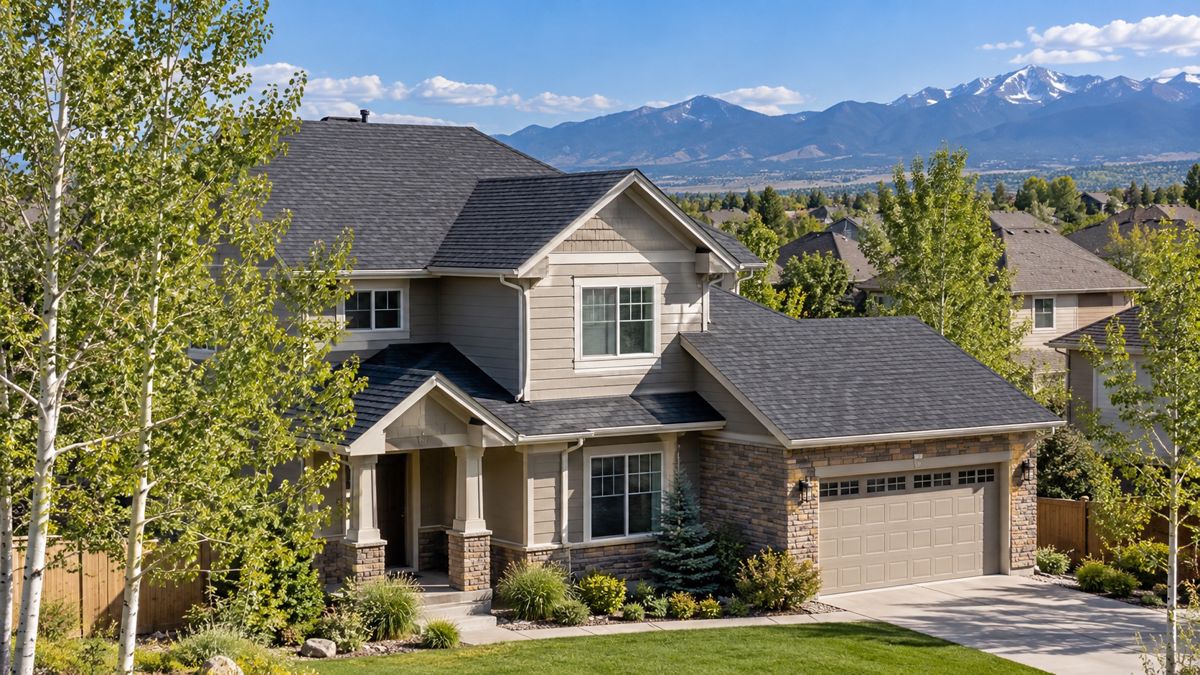
Most Denver homeowners can expect a new asphalt shingle roof to land somewhere in the five figures, often roughly $9,000 to $20,000 for a typical single-family home. Impact-resistant shingles, metal and tile cost more. These are rough market guides, not quotes from this business, and your own roof can fall outside them. The rest of this article explains what moves the number.
What is a typical price range for a new roof in Denver?
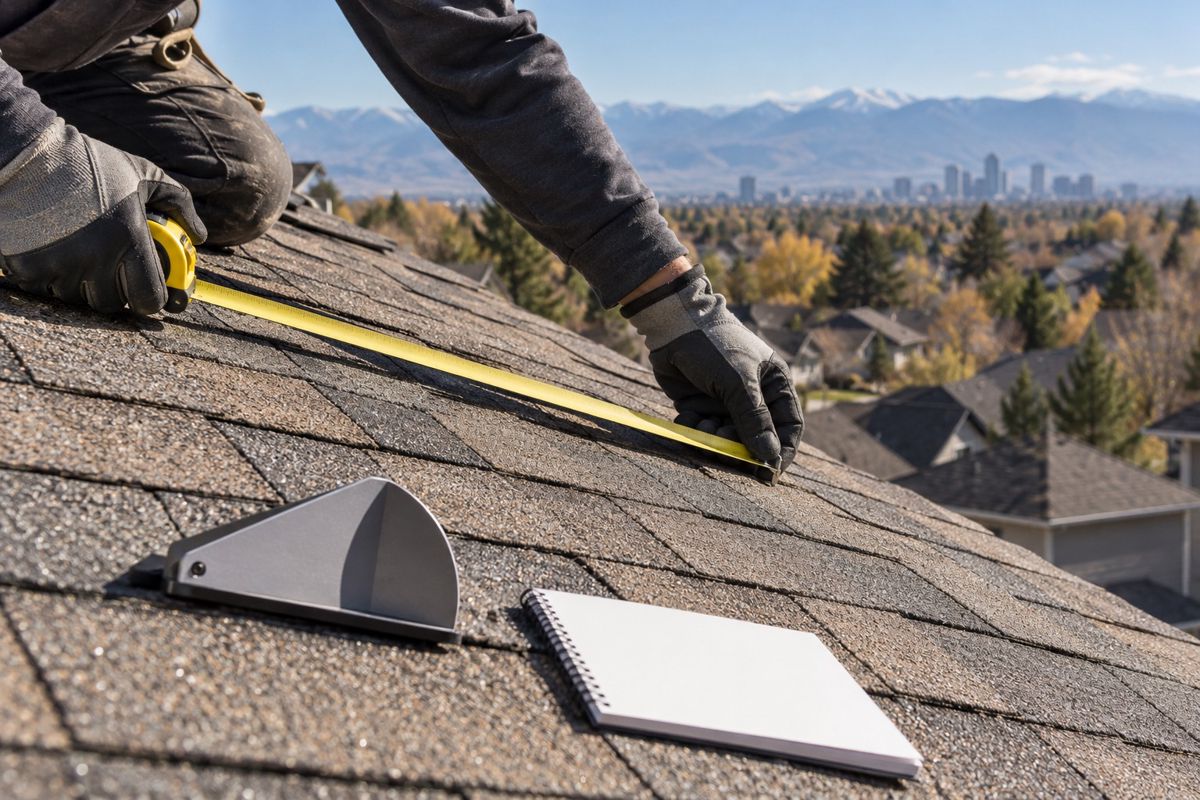
Roofers price by the square, which is 100 square feet of roof surface. A typical house has somewhere between 20 and 35 squares, depending on its size, pitch and number of slopes. Broad ranges that many homeowners see, all rough guides:
- Asphalt shingles: often roughly $450 to $800 per square installed, so about $9,000 to $20,000 for an average roof.
- Impact-resistant shingles: commonly add somewhere around 10 to 30 percent over standard shingles.
- Metal roofing: often two to three times the cost of asphalt, depending on the panel type.
- Concrete or clay tile: higher again, and the framing may need checking for weight.
Prices rise and fall with material costs and labor demand. After a big hail season, demand spikes and so can prices and wait times. Treat any number you read online, including these, as a starting point for questions.
Why do Denver roofs often cost more than the national average?
A few local reasons push the price up, though not always by much.
First, hail. Many Denver homeowners choose impact-resistant products, and some insurers ask for them or reward them with a discount. Second, snow and ice. Good underlayment and ice and water barrier at the eaves and valleys are not optional extras in this climate. Third, wind and altitude. Fastening details matter on the Front Range, and strong sun wears cheap materials faster.
Fourth, permits and codes. Most cities in the metro require a permit for a re-roof, and building departments can specify ventilation, underlayment and fastening. Finally, older neighborhoods bring older houses. Bungalows and Denver Squares often have steep or complex roofs, multiple layers and original wood decking that needs work.
What changes the price of your particular roof?
Two houses on the same street can get very different quotes. These are the main reasons.
- Size and shape. More slopes, valleys, dormers and chimneys mean more labor and waste.
- Pitch and height. Steep roofs and tall homes slow the work and need extra safety gear.
- Tear-off. Removing one layer is cheaper than removing two or three.
- Decking repairs. Rotted or damaged boards found under the old roof are usually billed per sheet.
- Flashing and ventilation. Replacing old flashing and improving attic airflow adds cost but prevents leaks later.
- Access. A tight driveway or a steep lot makes it harder to bring in materials and a dumpster.
- Permit fees and HOA requirements. These vary by city and neighborhood.
A quote that lists these items is easier to compare than one that gives a single number.
How do hail damage and insurance change the cost?
If hail damaged your roof, your homeowner's policy may pay for part of a new one. Whether it does depends on your policy, the age of the roof and what an adjuster finds.
Your deductible comes first. Many Colorado policies use a separate wind and hail deductible, often set as a percentage of your home's coverage rather than a flat amount. A policy with a one or two percent deductible on a large home means a larger share is yours. Some policies pay older roofs at a depreciated value, which lowers the check. Read the roof section of your policy before a storm, not after.
Be careful with contractors who knock on doors after a storm. Colorado has consumer rules aimed at contractors who work on insurance claims, including limits on offering to cover your deductible. Rules change, so check current details with the Colorado Division of Insurance. Our storm damage page goes through the steps in more detail.
Can impact-resistant shingles save money?
They can, but not for everyone. Class 4 impact-resistant shingles are tested against steel balls dropped to simulate hail. They cost more up front. Many insurers in hail-prone states offer a premium discount for them, and the size of that discount varies by company. Some insurers also use roof-specific deductibles or exclusions, so a better roof is not always rewarded.
Do the math with your own insurer. Ask what discount they give for a Class 4 roof, what proof they need and whether cosmetic hail damage is covered. Then compare that saving over the time you plan to stay in the home against the extra cost of the product. If you expect to sell soon, the benefit may be smaller. If you plan to stay, it may be worth more.
How do you compare roofing quotes fairly?
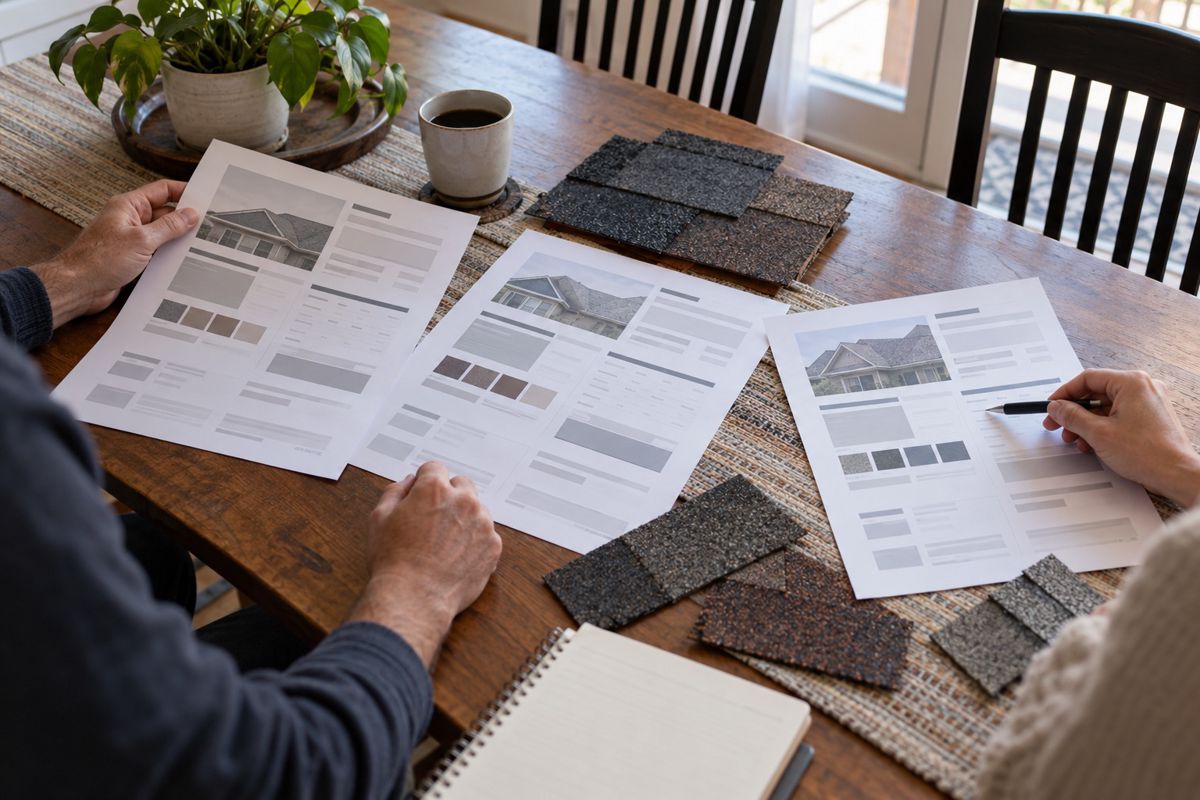
Get at least two or three written quotes, and make sure each one covers the same work. A useful quote names the product and its line, says whether it is a full tear-off, lists underlayment, flashing, vents and ridge cap, and states who pulls the permit and handles cleanup. It should say what happens if rotted decking is found.
- Ask each roofer for the same scope in writing.
- Check that the product, brand and layers match across quotes.
- Ask to see proof of license where your city requires one, and proof of insurance.
- Be wary of a price far below the others. It may leave out work you will pay for later.
- Do not pay the full amount upfront. Ask how payment is scheduled.
Take your time. A sound roof is something you only buy once in a while, and a good quote answers questions instead of avoiding them.
What should you do next?
Start by finding out the condition of your roof. A roof inspection tells you whether you need a repair or a full replacement, and it gives you photos for any insurance claim. If you already know the roof is worn out or has hail damage across several slopes, see our roof replacement page for what the job involves and how to ask for a written quote.