
Skip to content
  • Clear communication
  • Free inspections
Denver, CO (303) 555-0155
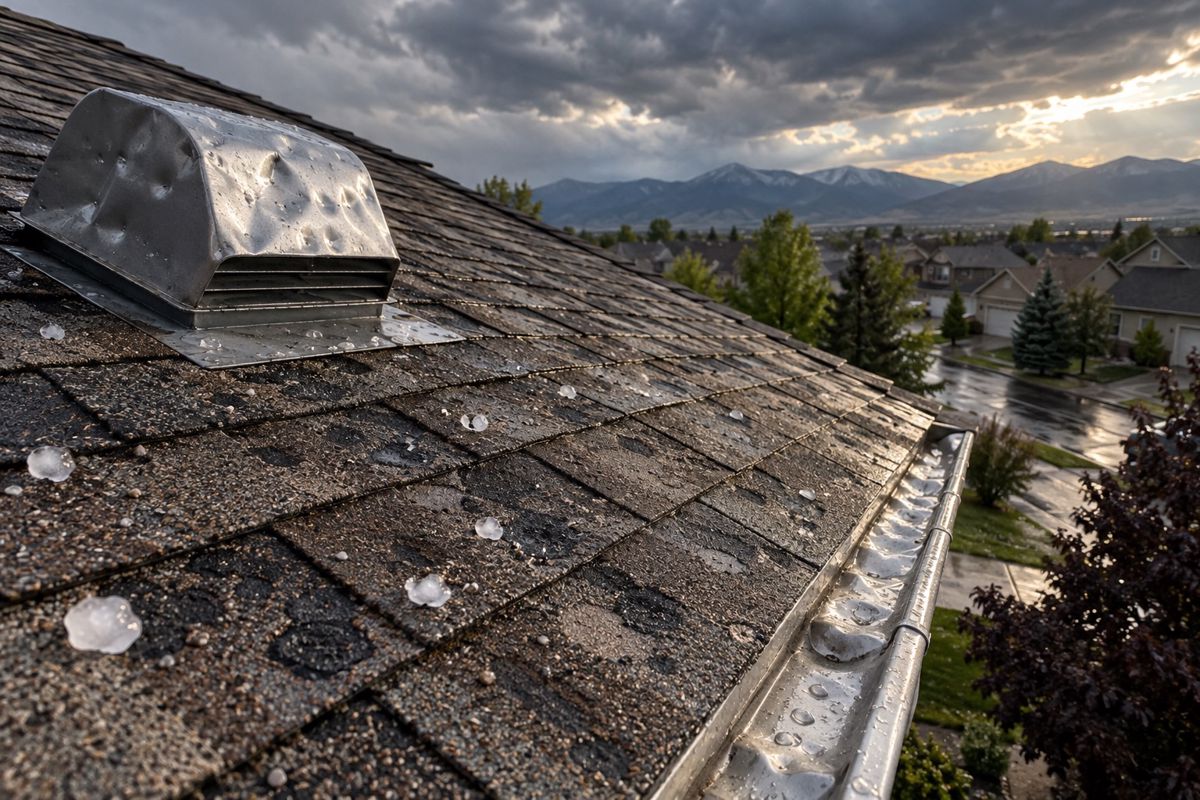
Hail-bruised shingles and a dented roof vent after a Denver storm

Storm and hail damage in Denver

Storm damage roof repair in Denver after hail

Denver sits in the Front Range hail belt. Here is how to spot damage, what to do first and what to watch for with claims and contractors.

  • Hail and wind damage checked roof-wide
  • Photos and notes to support your claim
  • Plain advice on repair versus replacement

Step 1 of 3

What do you need?

What does hail do to a roof in Denver?

The Front Range gets frequent large hail, mostly from spring into late summer. Stones the size of a quarter can bruise asphalt shingles. Larger hail can crack them, dent metal and break skylights, vents and gutters.

Hail damage is not always obvious. A bruise is a soft spot where the shingle mat is cracked and granules are knocked off. The roof may look fine from the street and still leak a few months later. Hail also damages the materials around the roof, such as flashing, vents, fences, siding and air conditioner fins.

Wind often arrives with hail. Gusts can lift shingle tabs, strip ridge caps and push debris onto the roof. Damage from wind and hail together can look different slope by slope, because the side facing the storm takes the worst of it.

How can you tell if your roof has storm damage?

From the ground, look for dented gutters, downspouts and vents, dents on the garage door, and spatter marks where hail cleaned dirt from siding or the roof. On the roof itself, a professional looks for:

  • Bruises that feel soft or show a dark spot with missing granules
  • Cracked or split shingles
  • Dented ridge caps, vents and flashing
  • Granules piled at the base of downspouts
  • Damaged skylights and chimney caps

Never climb on a roof after a storm, especially wet or steep ones. A roof inspection with photos gives you a record of what is there, which helps with any claim. If you already have a leak, the roof repair page explains how leaks are traced.

What should you do first after a storm?

Start with safety and records.

  1. Stay off the roof and check for water coming into the attic or ceilings.
  2. Take dated photos of damage you can see from the ground, inside the house and on the lawn.
  3. Note the date of the storm. Many policies set a deadline to report hail damage, so check yours.
  4. Protect the house from more water with a tarp or temporary patch, and keep receipts.
  5. Call your insurance company to open a claim if the damage is likely above your deductible.
  6. Get a written quote from a roofer, and compare more than one if the job is large.

Do not sign anything on the spot because someone knocked on the door after a storm. Take time to read the paperwork. A good contractor will not rush you into a contract.

Your insurer decides what is covered under your policy. An adjuster usually visits, writes up the damage and estimates the repair cost. Your deductible comes out of that amount. Many Colorado policies use a separate wind and hail deductible, often a percentage of your home's coverage, and older roofs may be paid at a depreciated value. Read your policy before you assume anything.

Colorado has consumer protection rules aimed at contractors who work on insurance claims. Broadly, they limit offers to pay or waive your deductible and require certain written contract terms. Rules change, so confirm current details with the Colorado Division of Insurance or an attorney.

Be cautious with out-of-town crews who arrive after a storm. Ask for a local address, references and proof of insurance, and read the contract before you sign. Check which permit your city requires.

What does storm repair cost, and how long does it take?

The price depends on how much of the roof is damaged, the material, the pitch and what is under the shingles. Spot repairs cost far less than a full replacement. When hail has bruised most of the roof, a roof replacement is often the sensible route. Insurance can change what you pay, but the quote should still list the work in writing.

Timing varies. After a big storm, many homeowners call at once, and crews and materials get booked up. Temporary protection can hold the roof together while you wait. A repair may take a day. A full replacement usually takes a few days, with weather delays possible.

Call when you see a leak, a dent, missing shingles or after any storm with large hail. See the Denver Roofers Pros home page for other services.

How it works

  1. Call or request a quote

    Tell us what is happening with the roof.

  2. Free inspection

    A roofer checks the roof and gives a written price.

  3. Work done right

    Clean crew, nail sweep, warranty in writing.

What you can expect

  • Clear communication

  • Free inspections

  • Written estimates

  • Local crew

Request storm and hail damage

Tell us what you need and we call you back.

No obligation.

Step 1 of 3

What do you need?

Questions about roofing in Denver

How big does hail have to be to damage a roof?

There is no exact size. Stones around an inch can bruise older or thinner asphalt shingles, and larger hail does more damage. Wind, the age of the roof and the material also matter. Because damage can be hard to see, a roof inspection after any storm with sizable hail is a good idea.

How long do I have to file a hail damage claim?

Policies set their own deadlines. Many insurers expect a prompt report, often within a year of the storm, but the exact period depends on your policy. Check your policy or call your insurer soon after the storm so you do not lose your claim to a deadline.

Should I let a door-knocking roofer inspect my roof after a storm?

Be careful. Some honest contractors do knock on doors, but out-of-area crews after a storm have a mixed record. Ask for a local address and proof of insurance, never sign a contract on the spot, and be wary of anyone who offers to cover your deductible. Colorado has rules on this, so check the current details.

Can my insurer drop me after a hail claim?

Claims can affect your premium or renewal, and some insurers raise rates or set higher deductibles in hail-prone areas. This varies by company and by policy. If you are worried, ask your insurer how a claim might affect you and compare that with the repair cost before you decide to file.

Is every damaged roof replaced after hail?

No. Replacement depends on how many bruises or breaks there are on each slope, the age and condition of the roof, and your policy terms. A few damaged shingles may be repaired. Widespread damage usually leads to replacement. An inspection with photos helps settle the question fairly.

What if my roof leaks right after the storm?

Move belongings, put out buckets and take photos. Then arrange a temporary tarp or patch to stop more water, and keep receipts, since your policy may cover reasonable emergency costs. Do not climb onto a wet roof yourself. Call your insurer and a roofer to schedule a proper assessment.

Ready when you are Call now or request a quote online. Call for a free inspection Get my free quote (303) 555-0155

Takes about 30 seconds. Get my free quote