
Skip to content
  • Clear communication
  • Free inspections
Denver, CO (303) 555-0155
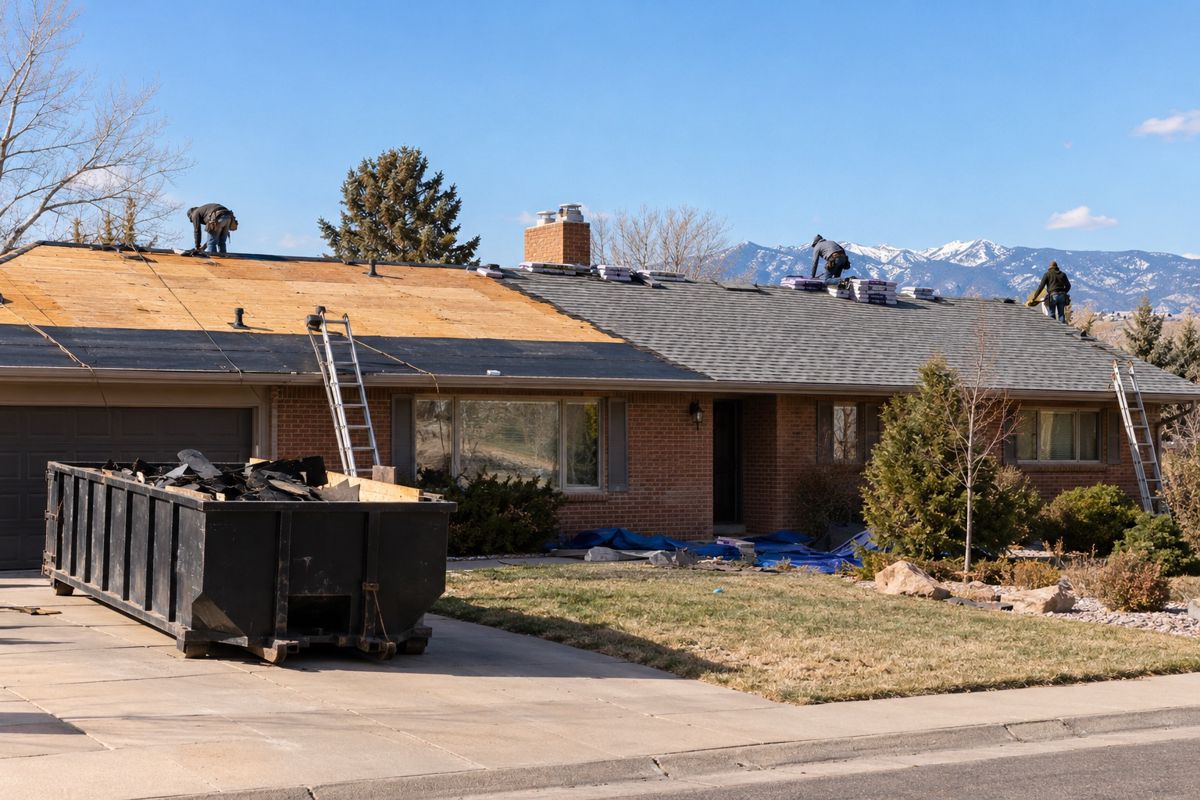
House roof half stripped to decking and half covered in new shingles

Roof replacement in Denver

Roof replacement in Denver for hail, sun and snow

A new roof is a big decision. Here is what the work involves, what drives the cost and what to expect from start to finish.

  • Materials chosen for hail and UV
  • Written quote before work starts
  • Permit and HOA questions raised early

When does a Denver roof need to be replaced?

Most Denver roofs do not fail all at once. They wear out in stages, and the Front Range speeds the process up. Hail bruises shingles and knocks off granules. Strong ultraviolet light at altitude dries out asphalt. Daily temperature swings make materials expand and contract again and again. A few heavy snow seasons later, the surface is tired.

Signs that point toward replacement instead of repair:

  • Bald patches where granules have washed into the gutters
  • Curling, cracked or brittle shingles
  • Dents or bruises across several slopes after a hail season
  • Leaks in more than one spot
  • Shingles that lift or blow off in ordinary wind

If the damage is limited to one area, roof repair may be enough. If hail is the cause, read about storm and hail damage before you talk to anyone about a claim.

What does a roof replacement involve?

A full replacement means taking the old roofing down to the deck, not laying a second layer on top. In most cases the steps run like this:

  1. Protect landscaping, windows and the driveway, then strip the old shingles and underlayment.
  2. Inspect the roof deck and replace any soft or damaged boards.
  3. Install ice and water barrier along the eaves and in valleys, then underlayment over the rest of the deck.
  4. Fit new flashing around chimneys, skylights, vents and walls.
  5. Install the new roofing, ridge cap and ventilation.
  6. Clean up, sweep the yard for nails and check the gutters.

Colorado codes and local building departments can call for specific details, such as underlayment type, ventilation and fastening. Your quote should say which materials and brands are included, in writing.

Which roofing material holds up to Denver weather?

There is no single right answer, but hail should drive the choice. Common options:

  • Standard asphalt shingles. Lowest upfront cost. They take hail damage more easily and may need replacing again after a severe storm.
  • Impact-resistant shingles. Rated Class 4 in hail testing. They cost more, and many insurers in hail country offer a premium discount for them. Ask your insurer what it gives and what proof it needs.
  • Metal roofing. Sheds snow well and lasts a long time. Thin metal can still dent in large hail, so look at the gauge and panel type.
  • Concrete or clay tile. Heavy, and the framing must carry the weight. Less common on newer Denver homes.

Fire-rated products matter near the foothills, where wildfire risk is higher. Some HOAs also limit colors and styles, so check your covenants before you pick samples.

We do not post prices on a web page, because every roof is different. These are the things that move the number:

  • Roof size and pitch, and how many slopes, valleys and dormers it has
  • Material grade, from basic asphalt to impact-resistant shingles or metal
  • Layers of old roofing to strip and any rotted decking underneath
  • Access, such as steep lots, tall homes and tight driveways
  • Ventilation, flashing and gutter work that has to be added or corrected
  • Permit fees and any HOA requirements

Insurance can change who pays. If hail caused the damage, your policy may cover part of the cost after the deductible, and some policies set a separate wind and hail deductible. For a broad look at numbers, see our article on what a new roof costs in Denver.

How long does it take, and when should you call?

Many single-family roofs take one to three days once the crew is on site and the weather cooperates. Large or complex roofs take longer. Wind, rain and snow can push a start back. Special-order materials can add lead time, especially after a big hail storm when many homeowners are calling at once.

On the day, expect noise from early in the morning, old shingles going into a dumpster or onto tarps, and a crew on the roof most of the day. Move cars out of the driveway and take pictures off walls under the roof, because hammering shakes the house.

Call when you see leaks in more than one place, hail damage across the roof, or a roof that is clearly past its useful life. If you are planning to sell, a roof inspection first can tell you whether to replace or repair. You can also go back to the Denver Roofers Pros home page to see the other services.

How it works

  1. Call or request a quote

    Tell us what is happening with the roof.

  2. Free inspection

    A roofer checks the roof and gives a written price.

  3. Work done right

    Clean crew, nail sweep, warranty in writing.

  • Clear communication
  • Free inspections
  • Written estimates
  • Local crew

Request roof replacement

Tell us what you need and we call you back.

No obligation.

Step 1 of 3

What do you need?

Questions about roofing in Denver

How do I know if I need a new roof or just a repair?

A repair fits a small, local problem such as one leak or a few lifted shingles on an otherwise sound roof. A replacement fits when damage spreads across several slopes, shingles are brittle, or leaks keep coming back after repairs. An inspection can sort it out before you commit to either choice.

Will insurance pay for a roof replacement after hail?

It can, if the hail damage is covered under your policy and the loss is more than your deductible. Many Colorado policies use a separate wind and hail deductible, often a percentage of the home's coverage. Read your policy, call your insurer and ask how it pays for older roofs. Do not rely on a contractor to decide coverage.

Do I need a permit to replace a roof in Denver?

Most cities in the Denver area ask for a permit on a re-roof, and the rules differ between Denver, Aurora, Lakewood and others. Ask your contractor which permit applies, who pulls it and what it costs, then confirm with your city building department. A written quote should say who handles it.

Can new shingles go over the old ones?

Building codes limit how many layers of shingles a roof can carry, and an overlay hides damaged decking and old flashing. Most roofers recommend a full tear-off in hail country, because bruised old shingles under a new layer cause problems later. Ask what your local code allows and what your quote assumes.

What time of year is best to replace a roof in Denver?

Late spring through early fall is the usual window, although afternoon storms can interrupt work. Shingles seal properly when the sun is warm, so cold months can slow the process. Winter jobs happen on dry, mild days. Many homeowners schedule after hail season ends, but waiting with a damaged roof can let leaks grow.

How long will a new roof last in Denver?

It depends on the material, the installation and the weather it sees. Hail, strong UV and big temperature swings wear asphalt roofs out faster than the rating on a shingle bundle suggests. Metal and tile usually last longer, but they cost more and can still be damaged by large hail.

Ready when you are. Call now or request a quote online.

Call for a free inspection
Takes about 30 seconds. Get my free quote