
Skip to content
  • Clear communication
  • Free inspections
Denver, CO (303) 555-0155
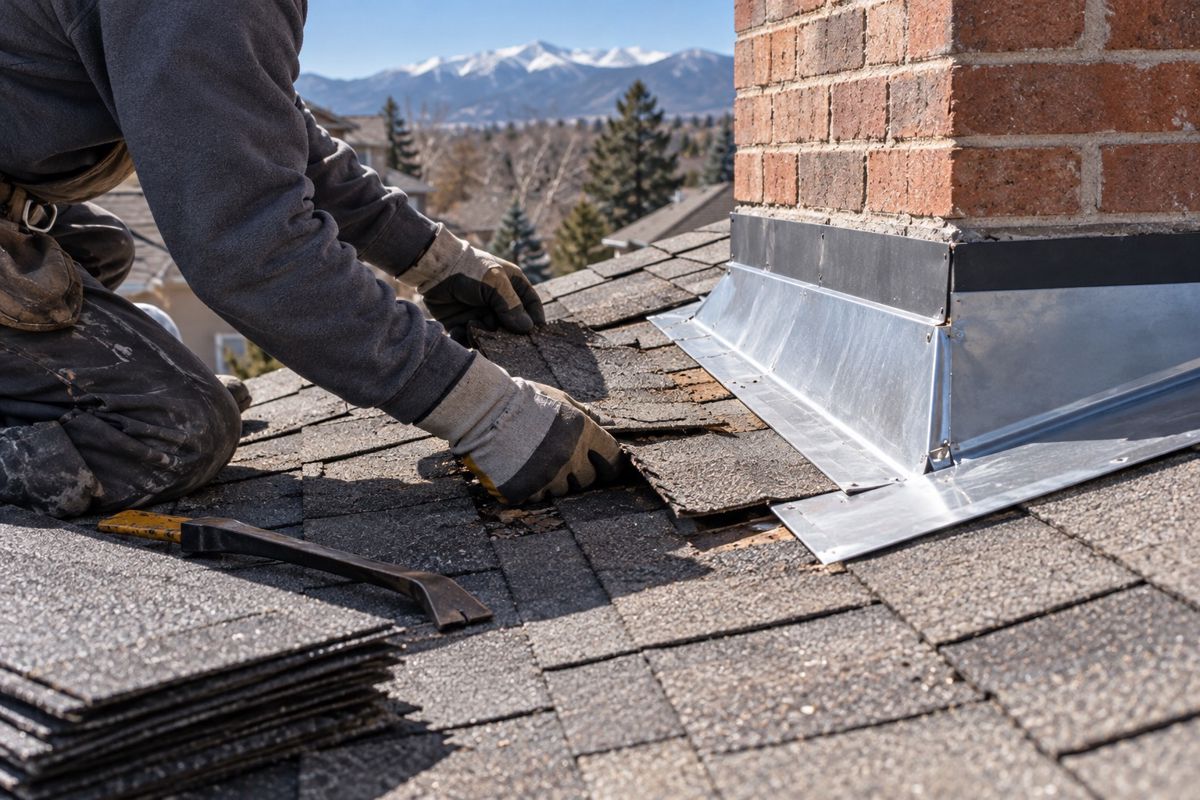
Gloved hands replacing cracked shingles beside a chimney flashing

Roof repair in Denver

Roof repair and leak detection in Denver, CO

Small roof problems get bigger in a climate like this. Here is how leaks are found, what a repair includes and when it makes sense to stop patching.

  • Leak tracing, not guesswork
  • Written quote before work starts
  • Honest advice on repair versus replacement

Step 1 of 3

What do you need?

What causes roof leaks in Denver?

Most leaks start at a weak point, not in the middle of a healthy roof. Denver adds a few causes of its own.

  • Hail bruising. Shingles lose granules and crack, then leak months after the storm.
  • Failed flashing. Metal and sealant around chimneys, skylights, walls and vents expand and contract through big daily temperature swings.
  • Ice dams. Snow melts on a warm roof, refreezes at the cold eaves and pushes water under shingles.
  • UV wear. Strong sun at altitude dries out shingles and sealant, so they crack sooner.
  • Wind. Gusty Front Range winds lift tabs and break seals.
  • Cracked pipe boots. The rubber collars around plumbing vents are a common small failure.

Older bungalows and ranch homes with several roof layers and patched additions tend to leak at the seams between old and new work.

How is a roof leak found?

The stain on a ceiling is rarely under the hole in the roof. Water runs along rafters and decking before it drips, so the real entry point is usually higher up the slope.

A good leak search works in steps. First, check the attic for damp insulation, dark wood and daylight around penetrations. Next, inspect the roof surface for missing or cracked shingles, rusty nails and worn sealant. Then look at every flashing detail, since most leaks start there. When the source is still unclear, a controlled water test with a hose, one section at a time, can show where it enters.

Take photos of the stain and note when it appears, for example only in wind-driven rain or only during snow melt. That detail helps narrow the search. If hail is a possible cause, a full roof inspection will tell you whether this is one problem or many.

What does a roof repair include?

The fix depends on the cause. Common repairs include:

  • Replacing cracked, missing or lifted shingles and resealing nearby tabs
  • Removing and replacing damaged flashing, rather than smearing sealant over it
  • Fitting new pipe boots and vent covers
  • Repairing small sections of flat or low-slope roof on additions and porches
  • Replacing soft decking where water has done damage

On older roofs, an exact color match is not always possible, because shingles fade in the Colorado sun. Ask to see samples before the work begins. If a leak needs to be stopped right away, a temporary tarp or patch can protect the house until the permanent repair can be made. A temporary fix is not a repair, so get the next step in writing.

We do not publish prices, because a two-hour flashing fix and a rotted valley are very different jobs. These factors matter:

  • How hard the problem is to reach, including steep pitch and height
  • Whether the leak has damaged decking, insulation or drywall below
  • The materials involved, and whether an older shingle can still be matched
  • How many repair points there are, and whether the same spot has been patched before
  • Minimum charges for a crew visit, which apply to small jobs

Insurance can come into it. If hail or wind caused the damage, compare the repair cost with your deductible before you file a claim. See the storm damage page for how that process works. Ask for a written quote that names the work, so you know what the price covers.

How long does a repair take, and when is repair not enough?

Many repairs take a few hours to a day, depending on the type of problem and the weather. Wind and wet roofs can delay the work, because crews cannot safely or properly seal shingles in those conditions. On the day, expect someone on the roof and possibly in the attic. You rarely need to be home all day.

Repair stops making sense when the roof is failing everywhere. Warning signs include shingles that crumble when lifted, leaks in several rooms, widespread granule loss, and repairs that keep failing. In that case, money spent on patches is better put toward a roof replacement.

Call as soon as you see a stain, drip or missing shingle. Water damage spreads through insulation and framing, and it costs more to fix the longer it sits. You can also start from the Denver Roofers Pros home page if you are not sure what you need.

How it works

  1. Call or request a quote

    Tell us what is happening with the roof.

  2. Free inspection

    A roofer checks the roof and gives a written price.

  3. Work done right

    Clean crew, nail sweep, warranty in writing.

What you can expect

  • Clear communication

  • Free inspections

  • Written estimates

  • Local crew

Request roof repair

Tell us what you need and we call you back.

No obligation.

Step 1 of 3

What do you need?

Questions about roofing in Denver

Why does my roof leak only sometimes?

Many leaks appear only in certain conditions, such as wind-driven rain, fast snow melt or ice dams. Water may also sit in insulation and show up days later. Note when the stain grows, and take photos. That detail helps the person tracing the leak work out where water is getting in.

Can a small leak wait until spring?

It is risky. Water that gets under shingles can soak insulation, rot decking and cause mold, and freezing and thawing make small gaps wider. A temporary patch or tarp can protect the house for a short time. Get the permanent fix scheduled rather than hoping the problem stays small.

Is roof sealant a good fix for a leak?

Sealant has a place on small gaps and some flashing details, but it is not a cure for failing materials. Strong UV and temperature swings in Denver break down sealant over time. A leak covered only with caulk often returns. Ask what the repair replaces, not just what gets sealed.

Will homeowner's insurance cover a roof leak repair?

It depends on the cause. Sudden damage from hail or wind may be covered, while leaks from wear and age usually are not. Policies and deductibles differ. Read your policy or call your insurer, and compare the repair quote with your deductible before filing a claim.

How do I know if a repair will match my roof?

Older shingles fade, and some styles are no longer made, so a perfect match is not always possible. Ask to see samples against your roof before work starts. Often a patch is placed where it is hard to see from the street. If the match matters to you or your HOA, say so up front.

Ready when you are. Call now or request a quote online.

Call for a free inspection
Takes about 30 seconds. Get my free quote