
Skip to content
  • Clear communication
  • Free inspections
Denver, CO (303) 555-0155
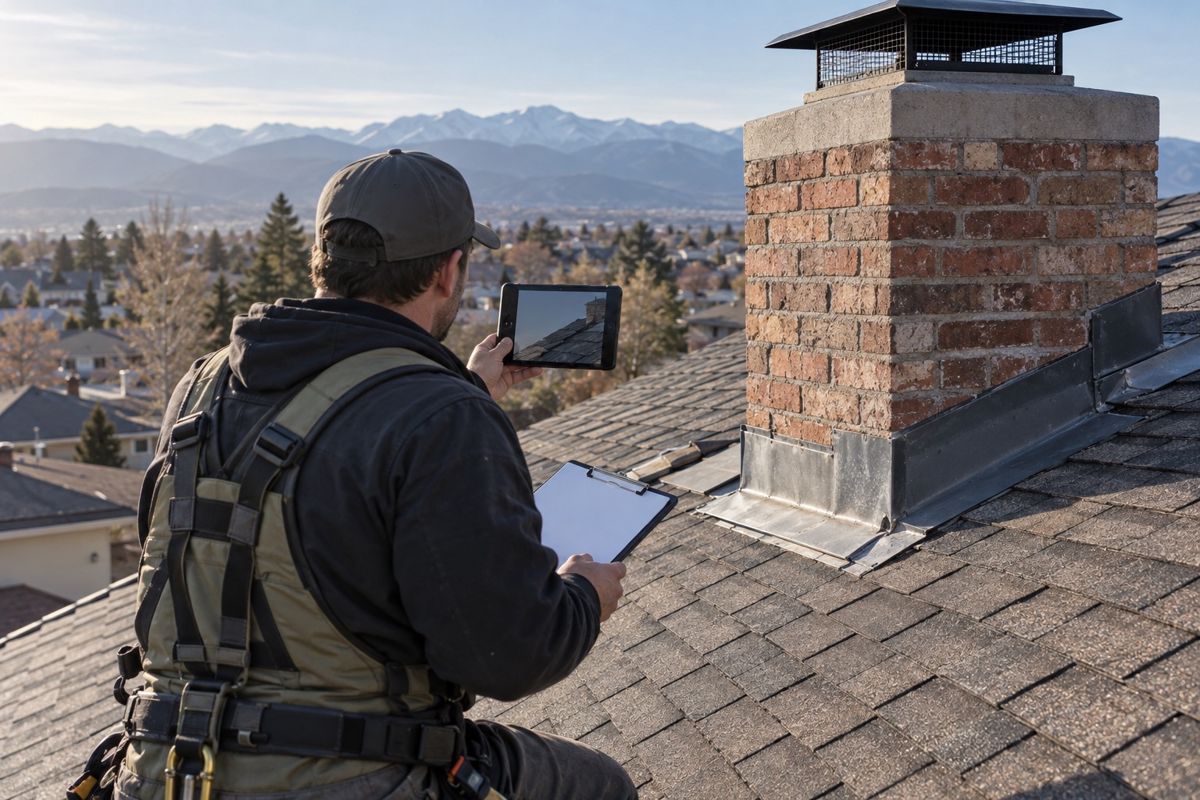
Inspector checking chimney flashing on a Denver home's shingle roof

Roof inspection in Denver

Roof inspection and certification in Denver, CO

An inspection tells you the real condition of your roof. Here is what gets checked, when to book one and what a report can and cannot tell you.

  • Surface, flashing and attic checked
  • Photos and notes you can keep
  • Useful for sales, claims and renewals

Step 1 of 3

What do you need?

What is a roof inspection and why get one in Denver?

A roof inspection is a careful look at the roof surface, flashing, vents, gutters and attic to see what condition the roof is in and what it needs. It is different from a quick glance from the yard. The goal is a clear answer to a simple question: repair, replace or leave it alone.

In Denver, the question comes up often. Hail can damage a roof without any visible leak. Strong UV, big temperature swings and snow loads age materials quickly. Many homes sit in neighborhoods where roofs of the same age face the same wear, and one hail season can change the picture overnight.

An inspection gives you facts before you spend money. It can also show small problems while they are still cheap to fix, and it can prevent a surprise during a sale.

When should you book a roof inspection?

Good times to book one include:

  • After a hail or wind storm, to document damage before a claim.
  • Before buying a home, especially an older one with a roof of unknown age.
  • Before selling, so you can fix issues or price the sale with real information.
  • Before an insurance renewal, when an insurer asks about roof condition.
  • Before winter, to spot problems that snow and ice would make worse.
  • When the roof is near the end of its life, to plan the budget.

If you are dealing with storm damage, the storm damage page explains what to do next. If you already know there is a leak, see roof repair and leak detection.

What gets checked during an inspection?

The exact steps vary, but a thorough inspection usually covers:

  • The roof surface, looking for hail bruises, cracked or missing shingles, granule loss and wear patterns by slope
  • Flashing around chimneys, skylights, walls and valleys
  • Vents, pipe boots and other penetrations
  • Gutters, downspouts and drip edges
  • The attic, for ventilation, damp insulation, stained decking and daylight
  • Signs of past repairs, sagging or soft areas

You should get notes and photos, and a plain summary of what is fine, what needs attention and what is urgent. Ask whether the inspector walks the roof or uses a drone or ladder, and why. On steep or fragile roofs, there are safe ways to look without walking on the surface.

A roof certification is a letter or report that states the condition of the roof on a given day and may estimate its remaining life. Buyers, lenders and insurers sometimes ask for one.

It is important to know what a certification is not. It is the opinion of the inspector at one moment, not an insurance policy and not a promise that the roof will never leak. Terms vary a lot, so ask what the certification covers, how long it is valid and what it excludes. If the roof is not ready to certify, the report should explain why and what would fix it.

Do not treat a certification as a substitute for a full inspection. Read the whole report, not just the front page. If your insurer or buyer has specific requirements, ask for them in writing before you book.

What affects the cost, and how long does it take?

We do not post prices here, because cost depends on the job. Factors include the size and pitch of the roof, the number of levels and access points, how detailed the report needs to be, whether photos and moisture checks are included, and whether it is a house or a larger commercial building.

Many house inspections take an hour or two on site, with the written report following afterward. Weather matters, because wet roofs and high winds make a safe, accurate inspection harder, so expect some rescheduling. You usually do not need to be home the whole time, but it helps to be there for questions and attic access.

If the report finds a problem, you can move to roof replacement or repair with real information. For other services, go back to the Denver Roofers Pros home page.

How it works

  1. Call or request a quote

    Tell us what is happening with the roof.

  2. Free inspection

    A roofer checks the roof and gives a written price.

  3. Work done right

    Clean crew, nail sweep, warranty in writing.

  • Clear communication
  • Free inspections
  • Written estimates
  • Local crew

Request roof inspection

Tell us what you need and we call you back.

No obligation.

Step 1 of 3

What do you need?

Questions about roofing in Denver

How often should a Denver roof be inspected?

Many homeowners check once a year and after any storm with large hail or strong wind. Roofs near the end of their life deserve more attention. Even a roof that looks fine from the street can hide bruises and failing flashing, so a regular schedule helps you catch problems early.

Do I need an inspection to file a hail claim?

You do not need one by law, but photos and a written report are strong support for a claim. Your insurer will send an adjuster, and having your own documentation helps you understand and discuss what they find. Take your own photos too, and note the storm date.

Will an inspection find every leak?

Not always. Some leaks show only in certain weather, and damage hidden under shingles or in the deck can be hard to see. A good inspection finds most visible problems and flags areas to watch. If a leak is active, a targeted leak search can follow.

Should I get an inspection before buying a house?

Yes, especially for older homes or any home with a roof of unknown age. A general home inspector may only glance at the roof. A separate roof inspection can help you negotiate repairs or credits and plan for replacement costs.

Is a roof certification a warranty?

No. A certification states the roof condition at one point in time, and some include an estimate of remaining life. A warranty is a separate promise with its own terms. Ask what a certification covers, how long it lasts and who stands behind it.

Do I need to be home during the inspection?

Not for the whole visit, but it helps. You can point out leaks or stains, give attic access and ask questions at the end. If you cannot be home, arrange access and ask for the written report with photos afterward so you can go through it at your own pace.

Ready when you are. Call now or request a quote online.

Call for a free inspection
Takes about 30 seconds. Get my free quote