Skip to content
  • Clear communication
  • Free inspections
Denver, CO (303) 555-0155
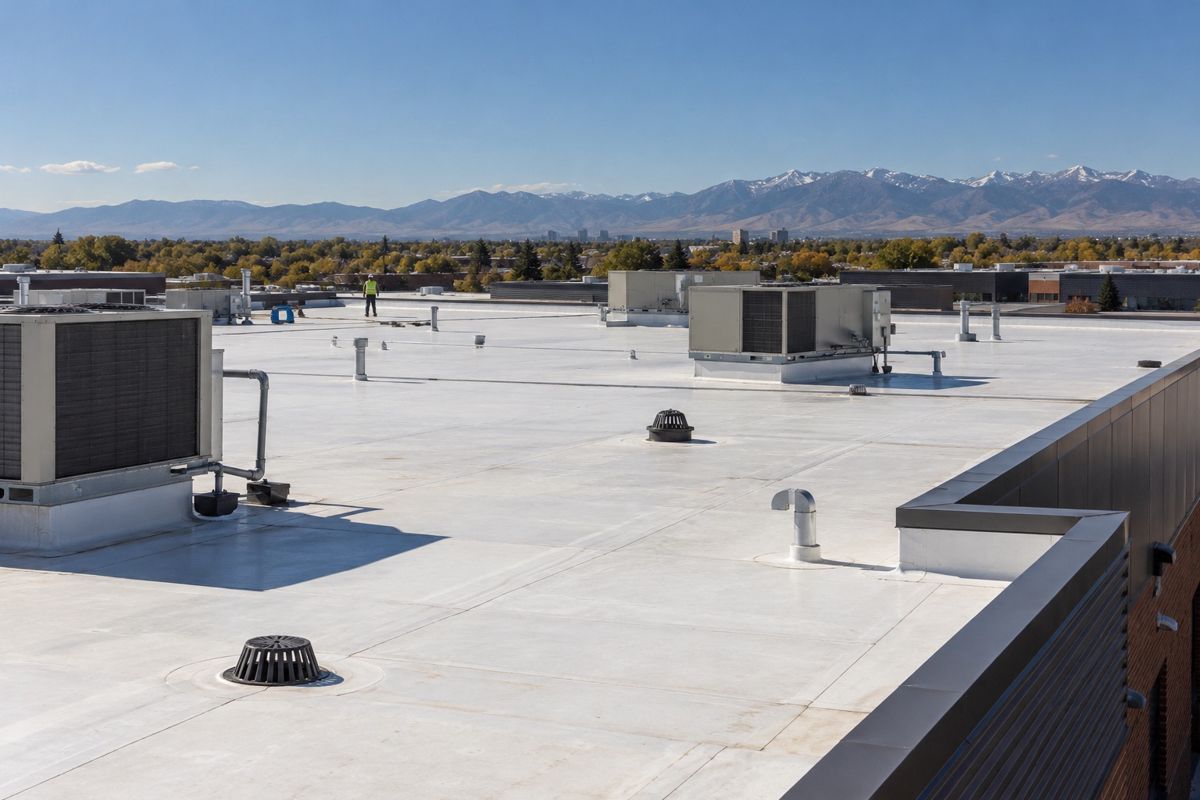
Flat white membrane roof with rooftop units on a commercial building

Commercial roofing in Denver

Commercial roofing in Denver for flat and low-slope roofs

Roof problems can disrupt a business. Here is what to know about membranes, hail, scheduling and planning a commercial roof project.

  • Flat and low-slope roof systems
  • Work planned around your building
  • Written scope and quote before work starts

Step 1 of 3

What do you need?

What types of commercial roofs are common in Denver?

Most commercial buildings in the metro have flat or low-slope roofs. The roofing system on top is usually one of a few types.

  • TPO and PVC. Single-ply membranes with welded seams, often white to reflect heat.
  • EPDM. A rubber membrane, usually black, common on older buildings.
  • Modified bitumen and built-up roofs. Layered asphalt systems with a long track record on flat roofs.
  • Metal panels. Common on warehouses, shops and some retail centers, and good at shedding snow.
  • Coatings. Liquid coatings that can extend the life of a roof that is still sound.

The right system depends on the building, the insulation underneath, the budget and how long you plan to own the property. Apartment buildings, offices, shops and light industrial buildings each have different needs.

What roof problems show up on Denver commercial buildings?

Flat roofs are less forgiving than sloped ones. Water has to be moved off the roof, and any weakness shows up fast.

  • Hail damage. Large hail can bruise or puncture membranes, crush insulation and damage metal edges and rooftop units.
  • Ponding water. Low spots hold water after snow melt or storms and shorten roof life.
  • Seam and flashing failures. Temperature swings and strong UV stress seams, curbs and edges.
  • Clogged drains. Leaves, grit and debris block drains and scuppers.
  • Rooftop equipment damage. Foot traffic from HVAC service punctures membranes.

Regular inspections catch these early. See the roof inspection page for what a check includes. Hail-related questions are covered on the storm damage page.

Repair, coating or replacement for a commercial roof?

The choice comes down to the condition of the roof and what is under the surface. Wet insulation matters more than how the surface looks.

A repair suits isolated problems on a roof that is otherwise sound. A coating can extend life when the membrane is intact and the insulation is dry. A replacement or a recover, which adds a new layer over the old one where codes allow, suits a roof with widespread leaks or wet insulation. A full tear-off costs more but lets you fix the deck and insulation.

Moisture surveys, core samples and roof plans help owners decide with real data instead of guesses. Ask for a written scope with the type of system, the insulation, the flashing details and what is not included. If you own or manage several buildings, a simple roof condition log helps you plan spending year by year.

We do not publish prices, because commercial roofs differ widely. These factors drive the number:

  • Total roof area and the number of penetrations, curbs and drains
  • The type of system and the thickness of insulation
  • Tear-off versus recover, and the condition of the deck
  • Energy code requirements for insulation and reflective surfaces
  • Access, such as cranes, lifts and limited staging space
  • Work in an occupied building, which can need phasing and extra protection
  • Permit fees and any manufacturer warranty requirements

Denver and other cities have energy and roofing rules that can affect larger buildings, including reflective or green roof requirements in some cases. They change, so confirm what applies to your property with the building department before you plan the job.

How long does a commercial roof project take?

A small repair may take a day. A full replacement on a mid-size building often runs from several days to a few weeks, depending on size, weather and how the work is phased. Denver's spring storms and winter cold can delay work. Many owners schedule during the warmer, drier months.

Working over tenants or customers takes planning. Ask about noise, rooftop access, parking for trucks and how the building stays protected if rain arrives mid-job. Written scopes should say who handles permits and what manufacturer warranty, if any, applies, and what the warranty covers.

Call before a small leak turns into a ceiling collapse, after a hail storm, before a lease or sale, or when a roof is reaching the end of its life. For houses, see our roof replacement page, or go back to the home page to see everything we cover.

How it works

1

Call or request a quote

Tell us what is happening with the roof.

2

Free inspection

A roofer checks the roof and gives a written price.

3

Work done right

Clean crew, nail sweep, warranty in writing.

  • Clear communication
  • Free inspections
  • Written estimates
  • Local crew

Request commercial roofing

Tell us what you need and we call you back.

No obligation.

Step 1 of 3

What do you need?

Questions about roofing in Denver

How do I know if my commercial roof needs replacing?

Widespread leaks, wet insulation, blistering or open seams, and repairs that keep failing are common signs. A professional inspection with a moisture survey can show whether the roof is close to the end of its life or whether repair or coating still makes sense.

Can a commercial roof be installed while the building is occupied?

Often yes, with planning. The work can be phased in sections, noisy tasks scheduled for quieter times, and openings protected so weather does not get in. Tell the roofer about tenants, deliveries, entrances and sensitive equipment in advance so the plan fits your operation.

What is the difference between a recover and a tear-off?

A recover installs a new roofing layer over the old one, which saves tear-off cost and time. A tear-off removes the old roofing first, so the deck and insulation can be checked and repaired. Codes limit the number of layers, and wet insulation usually rules out a recover.

Does hail damage on a commercial roof get covered by insurance?

It can, depending on your commercial policy, deductible and the age and condition of the roof. Document damage with photos and an inspection report, report the loss promptly and read your policy for roof-specific terms. Some commercial policies pay roofs at a depreciated value.

What warranty comes with a commercial roof?

It depends on the product and the contractor. Manufacturers may offer a material warranty, and workmanship terms are set by the contractor. Ask for the terms in writing, including how long they run, what is covered and what voids them, such as unapproved rooftop foot traffic.

How often should a commercial roof be inspected?

Many owners schedule a check once or twice a year, and after any major hail or wind storm. Roofs near the end of their life, or ones with ponding or past leaks, benefit from closer attention. A simple log of findings and repairs makes budgeting easier.

Ready when you are Call now or request a quote online. Call for a free inspection Get my free quote (303) 555-0155

Takes about 30 seconds. Get my free quote